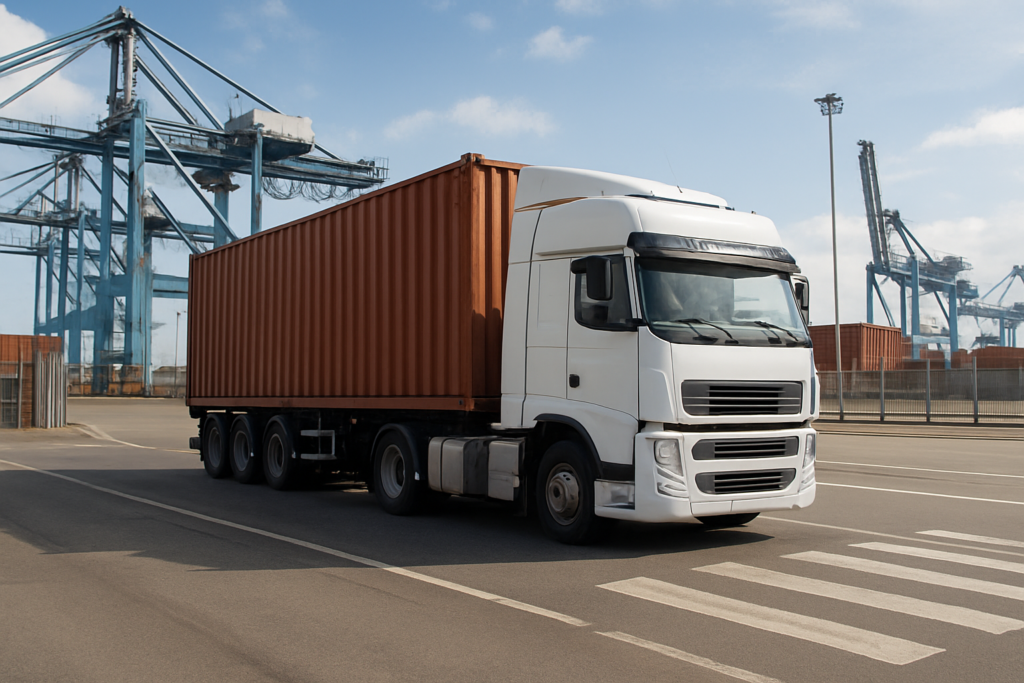
Drayage shipping refers to the short-distance transport of freight containers, typically from a port or rail terminal to a nearby warehouse or distribution center. Moreover, it serves as a critical link in intermodal logistics, connecting long-haul ocean and rail shipments to their final inland destinations. Understanding what is drayage shipping helps businesses optimize their supply chain efficiency and reduce unexpected costs.
Table of Contents
- How Drayage Shipping Works
- Types of Drayage Shipping Moves
- Why Drayage Costs Vary
- How Drayage Fits Into a 3PL Strategy
- Things to Know
Key Takeaways
- Drayage shipping covers short-distance container moves between ports, rail yards, and warehouses.
- It is a required step in most intermodal supply chains, not an optional add-on.
- Drayage rates are affected by fuel surcharges, port congestion, chassis availability, and wait times.
- Delays in drayage shipping can cascade across your entire fulfillment timeline.
- Partnering with a 3PL that manages drayage alongside warehousing reduces friction and cost.
- Proper coordination between drayage carriers and receiving facilities is essential to avoid detention fees.
How Drayage Shipping Works
When a shipping container arrives at a U.S. port like the Port of New York and New Jersey, it does not drive itself to a warehouse. Therefore, a drayage carrier picks up that container using a specialized truck, typically a short-haul semi, and moves it to the next point in the supply chain. That destination could be a container freight station, a bonded warehouse, or a distribution center just a few miles away.
This move is almost always under 100 miles. In dense metro areas like New York City, it often covers less than 30 miles. However, what makes drayage shipping logistically complex is not the distance but the coordination required. The drayage carrier must align with port availability windows, container release schedules, chassis pools, and receiving facility hours, all at once.
The drayage process typically follows this sequence:
- Container arrives via ocean or rail and clears customs
- Importer files an equipment interchange receipt and arranges pickup
- Drayage carrier retrieves the container from the terminal
- Container is delivered to the designated warehouse or transload facility
- Empty container is returned to the port or depot
Each of these steps has its own documentation requirement. Additionally, missed appointments or late returns result in detention and demurrage fees, which the U.S. Federal Maritime Commission regulates under the Shipping Act of 1984 as amended by the Ocean Shipping Reform Act of 2022.
Types of Drayage Shipping Moves
Not all drayage moves are the same. The term covers several distinct operation types. Furthermore, knowing which one applies to your shipment affects how you plan and budget.
Port Drayage: The most common form. A container moves from a marine terminal to a local warehouse or transload facility. This is the first leg most importers deal with after ocean freight.
Inter-Carrier Drayage: Freight moves between two different carriers, for example, from a rail carrier to a trucking company at an intermodal rail yard. This approach is common in transcontinental freight flows.
Intra-Carrier Drayage: Movement occurs within the same carrier’s network, such as shifting containers between two rail terminals operated by the same line.
Expedited Drayage: Time-sensitive cargo requires priority handling. In contrast, rates are higher, and not all carriers offer this service at every port.
Door-to-Door Drayage: The carrier handles both the pickup from the terminal and the final delivery to the consignee’s address. This often overlaps with last-mile logistics.
Understanding the correct move type helps you coordinate shipping warehousing companies more effectively. It also avoids miscommunication between your freight forwarder and the drayage carrier.
Why Drayage Costs Vary
Drayage pricing is not straightforward. In contrast to standard LTL or FTL quotes, drayage rates include multiple variable components that shift daily based on conditions at the port.
| Cost Factor | Why It Fluctuates |
|---|---|
| Fuel Surcharge | Tied to diesel price indexes, reviewed weekly |
| Chassis Fee | Charged per day; availability varies by port |
| Detention/Demurrage | Triggered by delays at pickup or delivery |
| Congestion Surcharge | Applied during peak port volume periods |
| Overweight Fee | Containers exceeding 44,000 lbs on U.S. roads |
| Hazmat Fee | Required for regulated cargo classifications |
Port congestion is a major driver of unexpected cost. During periods of high import volume, terminals hold containers for days past their free time window. As a result, if your drayage carrier cannot retrieve the box in time, demurrage fees accumulate quickly.
Chassis availability compounds the problem. Many ports in the U.S. operate through a pool-of-pools chassis model managed by the Ocean Carrier Equipment Management Association (OCEMA). When chassis are scarce, carriers spend hours repositioning equipment before they can even begin your move.
Knowing what is pick pack and ship in the context of downstream fulfillment clarifies why drayage delays matter so much. A container sitting at port is inventory that cannot be picked, packed, or shipped to your customers.

How Drayage Fits Into a 3PL Strategy
For most businesses, drayage shipping is not managed in isolation. It sits between the international leg of a shipment and the domestic fulfillment process. Furthermore, a well-structured 3PL relationship can absorb this complexity so that importers are not negotiating separately with ocean carriers, drayage providers, and warehouse operators.
At Warehousing NYC By Best, we handle transportation as part of a broader 3PL offering that includes LTL, FTL, parcel, and last-mile delivery. When a container arrives at the Port of New York and New Jersey, our team coordinates the drayage move directly to our facility. As a result, freight enters our warehouse management system immediately upon receipt. That direct handoff eliminates the dead time and documentation gaps that occur when businesses manage each vendor independently.
Our cloud-based WMS gives clients real-time visibility into inventory status from the moment a container is unloaded. Additionally, we integrate directly with ERP systems and marketplace platforms via our in-house development team. This means order fulfillment can begin the same day containers are received and processed.
Understanding how modern warehousing uses technology to track and protect inventory is directly relevant here. When drayage, receiving, and inventory management operate within a connected system, the risk of loss, miscount, or delay drops considerably. Businesses that treat drayage shipping as a disconnected step often struggle with reconciliation issues when containers arrive short or damaged.
For operations that rely on real-time stock accuracy, reviewing the pros and cons of using rfid for inventory management is worth the effort, especially if your volume warrants the infrastructure investment.
Things to Know
- Free time at U.S. ports is typically two to four business days before demurrage fees begin. This window varies by ocean carrier and terminal.
- Drayage carriers must hold a valid USDOT number and often require port-specific credentials such as a Transportation Worker Identification Credential (TWIC) card for terminal access.
- Not every trucking company can legally handle overweight containers on public roads. Weight permits are required for loads exceeding federal limits on U.S. highways.
- Container appointments at major ports like the Port of Los Angeles or Port of New York are scheduled through terminal operator portals. Missed windows often result in re-booking delays of 24 to 72 hours.
- Transloading, which involves moving cargo from a container into domestic trailers, is a common alternative to traditional drayage. This approach can reduce costs for high-volume importers.
Start Managing Drayage Shipping the Right Way
If drayage delays are eating into your fulfillment timelines, the issue often starts with disconnected vendor relationships rather than port conditions alone. Get a free estimate from our team at Warehousing NYC By Best and see how integrated transportation and warehousing can simplify your entire import process. Tell us your container volume, destination zip codes, and current pain points, and we will respond with a customized plan built for the NYC metro and tri-state area.
Frequently Asked Questions
Q: What is the difference between drayage and freight shipping?
Drayage is a short-distance move, typically under 100 miles. In contrast, freight shipping refers to longer hauls by truck, rail, or ocean carrier. Drayage is almost always part of an intermodal chain, serving as the connector between major transport modes. Standard freight shipping can operate independently over long distances without intermodal transfers.
Q: Who pays for drayage shipping?
The importer or consignee is typically responsible for drayage costs, though this can be negotiated in trade terms. Under DDP (Delivered Duty Paid) and DAP (Delivered at Place) Incoterms, seller responsibilities may extend further. Always confirm who owns the drayage leg before finalizing your purchase order terms.
Q: How long does a drayage move take?
A standard drayage move takes one to two days once the container is released by the terminal. However, delays at port, chassis shortages, or missed appointments can extend this to several days. Port congestion during peak import seasons, such as the pre-holiday period, frequently stretches typical timelines.
Q: Can drayage carriers handle hazardous materials?
Some drayage carriers are certified to handle hazmat freight, but not all, and specialized documentation is required. Shippers must provide a proper hazmat manifest, and carriers must hold appropriate endorsements under federal FMCSA regulations. Always confirm hazmat capability before booking.
Q: What happens if my container is not picked up in time?
If your drayage carrier misses the free time window at the terminal, the ocean carrier begins charging daily demurrage fees. These fees can reach hundreds of dollars per day per container. The Ocean Shipping Reform Act of 2022 gave the Federal Maritime Commission stronger authority to regulate these charges and ensure they are applied fairly.