
Supply chain visibility tools are software platforms and integrated systems that give businesses real-time insight into inventory movement, shipment status, and supplier activity across their entire logistics network. Additionally, these tools empower companies to move beyond delayed data and reactive decision-making. Without supply chain visibility tools, organizations directly increase costs and customer complaints.
Table of Contents
- The Visibility Gap That’s Costing Businesses
- How Supply Chain Visibility Tools Actually Work
- Key Features to Compare When Evaluating Supply Chain Visibility Tools
- Things to Know
- How Warehousing NYC By Best Supports Supply Chain Visibility Tools
Key Takeaways
- Only 6% of companies report full end-to-end supply chain visibility, according to the GEODIS Supply Chain Worldwide Survey (2025).
- The supply chain visibility software market was valued at USD 3.17 billion in 2024 and is projected to reach USD 9.78 billion by 2035, per Market Research Future (May 2026).
- Cloud-based visibility platforms grew 47% year-over-year during 2024-2025, far outpacing on-premises solutions at 8.2% growth.
- Businesses with robust visibility tools can reduce the impact of disruptions by approximately 30%, according to Market Research Future.
- Integration complexity and data quality remain the top barriers to adoption, cited by 47% and 44% of organizations respectively, per a 2025 PwC survey.
- Partnering with a 3PL that offers cloud-based warehouse management systems can close visibility gaps without heavy internal IT investment.
The Visibility Gap That’s Costing Businesses
Most supply chains look fine on paper until something goes wrong. A port delay, a supplier shortage, or a fulfillment error can ripple through your entire network before anyone has the data to respond. This is the core problem that supply chain visibility tools are designed to solve.
The numbers paint a stark picture. According to the GEODIS Supply Chain Worldwide Survey (2025), only 6% of companies report full end-to-end visibility into their supply chain. Furthermore, a separate March 2026 survey of 2,805 organizations by Achilles found that only 6% had full visibility into Tier-2 and Tier-3 suppliers. The overwhelming majority of businesses are making logistics decisions with incomplete information.
The market has responded decisively. According to Market Research Future (May 2026), the global supply chain visibility software market was valued at USD 3.17 billion in 2024. It is projected to reach USD 9.78 billion by 2035, growing at a CAGR of 10.79%.
Moreover, Global Market Insights Inc. (2025) estimates a slightly different baseline at USD 3.3 billion in 2025. They project a CAGR of 13.4% through 2035, reflecting the broad range of segment definitions across research firms.
Adoption is accelerating for a reason. Businesses with robust visibility tools can reduce the impact of disruptions by approximately 30%, per Market Research Future. That figure is hard to ignore when a single missed shipment can trigger chargebacks, stockouts, or lost retail accounts.
How Supply Chain Visibility Tools Actually Work
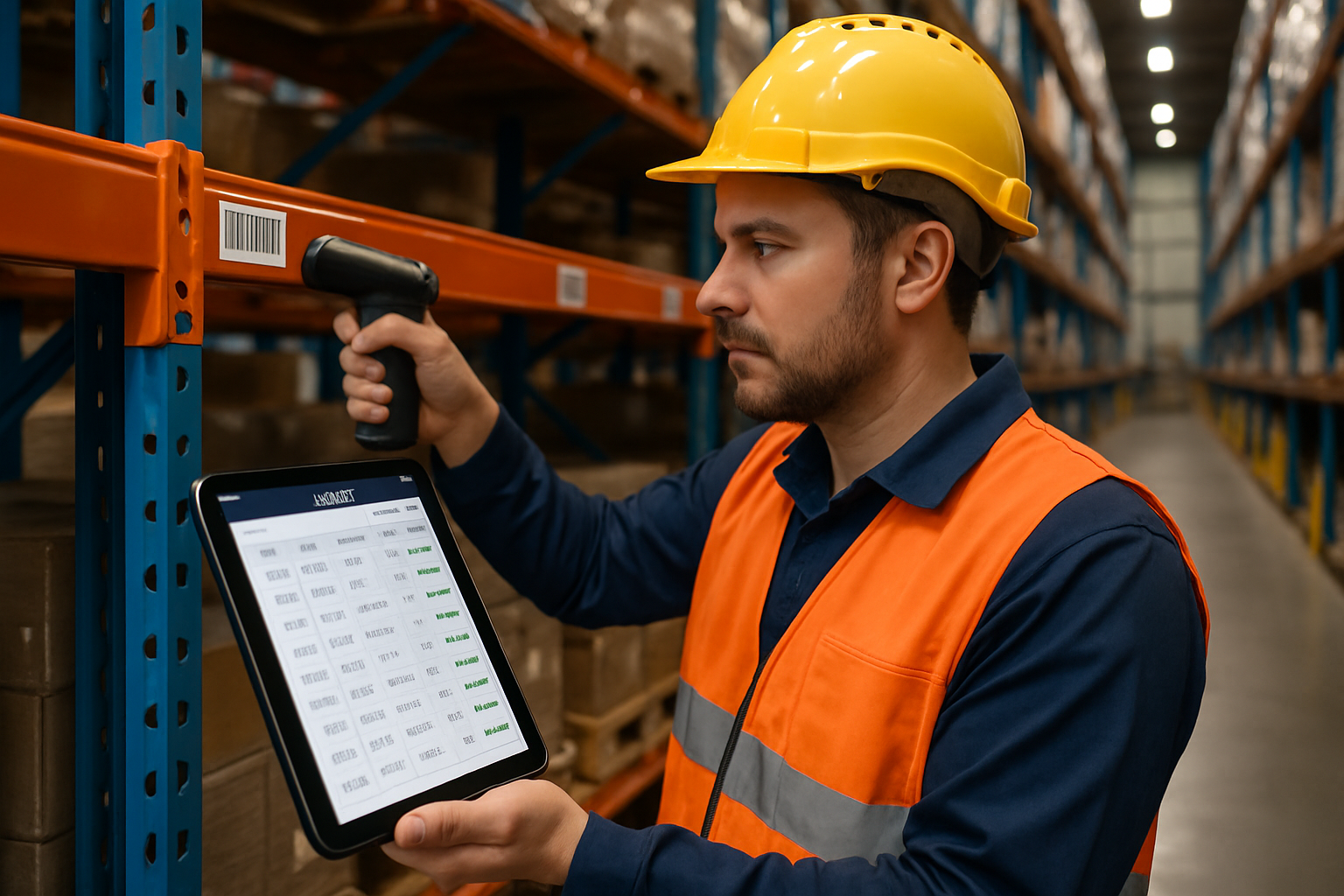
At their core, these platforms aggregate data from multiple nodes in your supply chain: carriers, warehouses, suppliers, ERP systems, and e-commerce storefronts. They present that data in a unified interface, often with alerts, predictive flags, and integration APIs.
The shift toward cloud-based architectures has accelerated this capability significantly. Major cloud visibility platforms achieved 47% year-over-year growth during 2024-2025. In contrast, on-premises solutions grew just 8.2% during the same period (2025 industry data). The reason is straightforward: cloud platforms connect faster, update in real time, and don’t require in-house server infrastructure.
A modern visibility platform typically integrates with:
- Warehouse management systems (WMS): Real-time inventory counts, pick-and-pack status, and cycle count data
- Transportation management systems (TMS): Carrier tracking, estimated arrival times, and exception alerts
- ERP and marketplace connectors: Order data from Shopify, Amazon, WooCommerce, or SAP flows directly into the visibility layer
- Supplier portals: Purchase order confirmations, advance shipping notices, and Tier-2 supplier status
Understanding what is cross docking in warehousing becomes especially relevant here. Cross-docking workflows depend entirely on coordinated, real-time data between inbound carriers and outbound dispatch. Without visibility tools, cross-docking breaks down quickly.
Implementation is where many organizations struggle. A 2025 PwC survey found that 47% of organizations face integration complexity and 44% struggle with data quality when deploying these platforms. These are not small hurdles. Therefore, before selecting a platform, businesses need to audit their existing systems and data flows.
Key Features to Compare When Evaluating Supply Chain Visibility Tools
Not every platform is built for every operation. The right tool depends on your volume, your supplier base, your sales channels, and whether you manage your own warehouse or use a third-party provider.
| Feature | Why It Matters |
|---|---|
| Real-time shipment tracking | Reduces reactive customer service and carrier disputes |
| ERP/marketplace integration | Eliminates manual data entry and sync errors |
| Exception alerts and AI flags | Allows proactive problem resolution before impact |
| Supplier portal access | Extends visibility to Tier-2 and Tier-3 nodes |
| Reporting and analytics | Supports data-driven procurement and fulfillment decisions |
| Cloud-based architecture | Faster deployment and lower IT overhead |
| API flexibility | Critical for custom integrations and growing tech stacks |
When you’re also weighing how to choose a 3pl provider, visibility technology should be near the top of your checklist. A 3PL that offers a cloud-based WMS with ERP and marketplace connectivity removes much of the integration burden from your internal team.
Physical warehouse design also plays a role. Platforms that track inventory in real time are only as accurate as the physical layout that supports proper scanning and movement. Additionally, reviewing warehouse layout design principles alongside technology selection ensures the physical and digital layers stay aligned. Similarly, understanding your types of warehouse racking systems affects how SKUs are slotted, which in turn affects how inventory data flows through your WMS.

Things to Know
- Visibility is only as good as the data feeding the system. Poor labeling, inconsistent scanning, or incomplete supplier data will undermine even the most advanced platform.
- Only 45% of mid-market manufacturers and distributors have taken steps to enhance visibility in the past year, according to Eide Bailly. This means many businesses are still significantly behind.
- Integration complexity is the top implementation barrier, cited by nearly half of organizations in a 2025 PwC survey. Therefore, budget time and resources for system audits before deployment.
- Broader supply chain visibility solutions (including hardware, services, and software) represent a much larger market. MRFR reported USD 12.5 billion in 2024, growing to USD 25 billion by 2035 at a 6.5% CAGR (March 2026). The software-only market is a subset of this.
- AI-driven exception management is becoming a standard feature, not a premium add-on. As platforms compete, they add predictive disruption alerts and automated routing suggestions.
How Warehousing NYC By Best Supports Supply Chain Visibility Tools
At Warehousing NYC By Best, we operate as a full-service 3PL for businesses shipping into and throughout the NYC metro and tri-state area. Our cloud-based WMS connects directly with ERP systems and major marketplaces including Shopify, Amazon, and WooCommerce through our in-house development team.
That integration layer is what makes our inventory replenishment service function. Clients get real-time tracking and cycle count data without building their own tech stack. Moreover, from LTL and FTL transportation to last-mile delivery and cold chain logistics, every operational layer feeds into a single visibility framework. Clients see what we see, in real time.
Take Control of Your Fulfillment Visibility Today
Incomplete data is not a minor inconvenience. It is a direct contributor to missed deliveries, excess carrying costs, and customer attrition. With market investment in supply chain visibility tools accelerating rapidly, businesses that delay adoption fall further behind each quarter.
Request a free estimate from Warehousing NYC By Best and find out how our integrated 3PL infrastructure can close your visibility gaps starting this week. Reach out today to schedule a consultation with our operations team.
Frequently Asked Questions
Q: What is the difference between supply chain visibility tools and a TMS or WMS?
A TMS manages transportation execution, a WMS manages warehouse operations, and supply chain visibility tools sit above both. They unify data across the full network.
A visibility platform aggregates feeds from your TMS, WMS, ERP, and supplier systems into one interface. While a TMS or WMS handles execution within its own domain, a visibility layer provides the cross-functional, end-to-end view that individual systems cannot offer on their own.
Q: How long does it typically take to implement a supply chain visibility platform?
Implementation timelines vary widely. Cloud-based SaaS tools deploy in a few weeks. Enterprise-grade deployments requiring deep ERP integration typically need several months.
The primary variable is integration complexity. Organizations with standardized data formats and modern ERP systems will deploy faster. Those with legacy systems or multiple disconnected data sources typically need additional pre-work before going live.
Q: Can a small or mid-sized business justify investing in visibility tools?
Yes. Cloud-based platforms have significantly lowered the cost of entry. Mid-market adoption has increased noticeably, with 45% of mid-market manufacturers and distributors enhancing visibility in the past year, per Eide Bailly.
The ROI case is strongest when measured against disruption costs. A single delayed shipment affecting a retail customer relationship can exceed the annual cost of a mid-tier SaaS visibility subscription.
Q: Do supply chain visibility tools work with e-commerce platforms like Shopify or Amazon?
Most modern visibility platforms offer native or API-based integrations with major e-commerce storefronts. This makes order status and inventory data accessible across all channels.
For businesses selling through multiple channels simultaneously, this integration is essential. It prevents overselling, enables accurate promise dates, and gives customer service teams real-time fulfillment status without relying on manual warehouse updates.
Q: What should I ask a 3PL about their visibility capabilities before signing a contract?
Ask whether they offer a cloud-based WMS. Inquire what ERP and marketplace integrations they support. Additionally, ask how clients access real-time inventory and shipment data. Finally, determine whether their development team can build custom integrations.
Visibility gaps often originate at the 3PL level, not the shipper level. A provider without strong technology infrastructure will limit your ability to respond quickly to disruptions regardless of what platform you use internally.
The Bottom Line on Supply Chain Visibility Tools
The data is clear: most businesses still operate without adequate visibility. The cost of that gap compounds with every disruption. Supply chain visibility tools are no longer a luxury reserved for enterprise shippers. Cloud-based platforms have made them accessible to mid-market operations. Moreover, 3PL partners with strong WMS infrastructure can accelerate deployment without heavy internal IT investment.
If your operation is based in or shipping through the NYC metro area, the next step is straightforward. Evaluate your current data gaps, identify the integration points that matter most, and talk to a logistics partner who can close them. Request a free estimate from Warehousing NYC By Best today.