
What’s In This Guide
- What Is Physical AI in Warehousing?
- How Is Physical AI Different From Traditional Warehouse Automation?
- How Do WMS, IoT, Computer Vision, AMRs, and Robots Work Together?
- How Does Physical AI Work in a 3PL Warehouse?
- Where Can Physical AI Improve Warehouse Logistics?
- Frequently Asked Questions
- Build Warehouse Technology Around the Operation
A warehouse can be automated without being intelligent. Conveyors, sorters, scanners, and fixed robotic cells can follow predefined rules efficiently, but they do not automatically understand changing conditions or decide how to respond.
Physical AI adds that adaptive layer. Gartner names physical AI among its top supply chain technology trends for 2026, describing it as technology that combines AI models with IoT sensors, robotics, and automation systems to enable real-time sensing, analysis, and execution. For warehouse logistics, this can connect software decisions directly to what sensors and equipment detect and do on the floor.
Quick Facts
- Physical AI connects digital intelligence with physical warehouse equipment.
- A WMS supplies inventory, order, location, and task context, while sensors and computer vision report real-world conditions.
- AMRs and warehouse robotics turn software-selected actions into physical movement or handling tasks.
- Traditional automation follows predefined workflows; physical AI can adapt within defined operating rules.
- Successful deployment starts with clean data, integration, measurable use cases, and human oversight.
What Is Physical AI in Warehousing?
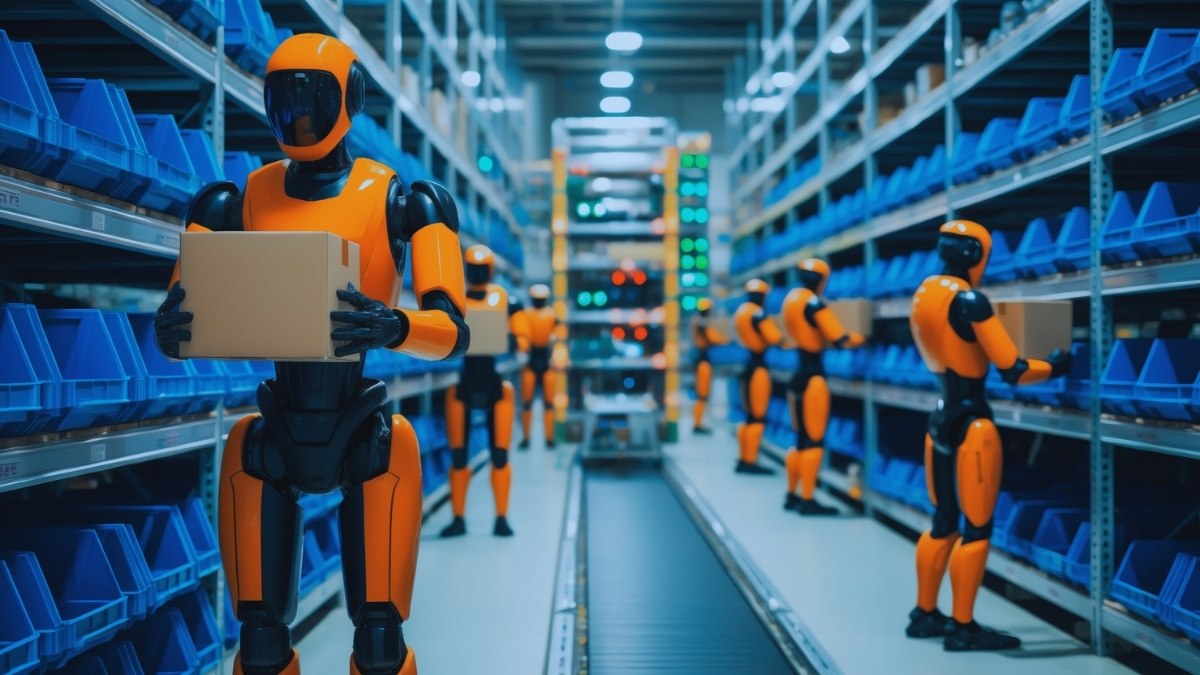
Physical AI logistics refers to AI systems that perceive a physical environment, interpret what is happening, and help equipment take action. NIST describes autonomous systems as combining robotic or automation capabilities with advanced algorithms, including AI, to select and execute actions without human intervention.
In a 3PL warehouse, physical AI can connect the warehouse management system (WMS), IoT devices, cameras, autonomous mobile robots (AMRs), robotic arms, conveyors, and warehouse execution software.
A robot by itself is not necessarily physical AI. A sensor by itself is not physical AI. The key is coordination among sensing, software intelligence, business rules, and physical execution.
How Is Physical AI Different From Traditional Warehouse Automation?
Traditional warehouse automation and physical AI can use the same equipment. The difference is how decisions are made.
|
Dimension |
Traditional Automation |
Physical AI |
|
Decision model |
Fixed rules and programmed sequences |
AI-assisted decisions that adapt within constraints |
|
Inputs |
Scans, timers, preset triggers |
WMS data, IoT signals, vision, equipment status |
|
Execution |
Repeats a defined workflow |
Adjusts routing, task choice, or handling based on conditions |
|
Best fit |
Stable, predictable processes |
Variable environments with frequent exceptions |
|
Human role |
Configure and monitor |
Set objectives, guardrails, and review exceptions |
How Do WMS, IoT, Computer Vision, AMRs, and Robots Work Together?
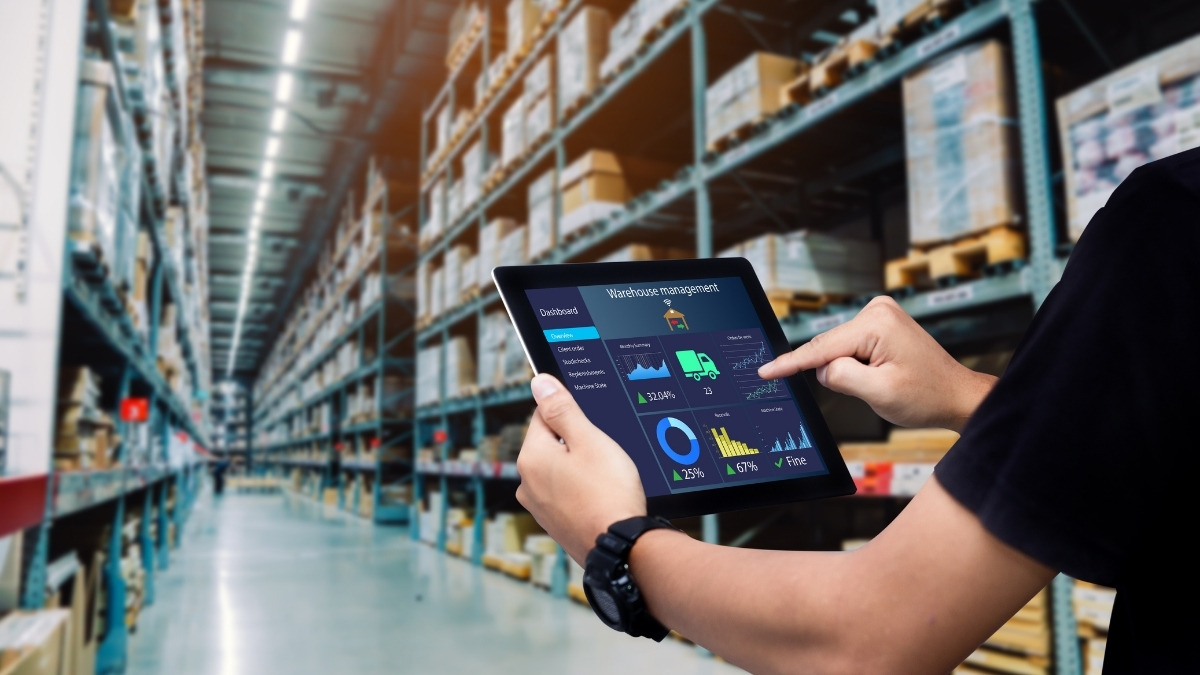
WMS: The Operational Context
The WMS holds inventory locations, order priorities, SKU data, task queues, and fulfillment rules. Robotics implementations often require integration with WMS and other digital infrastructure so equipment can work from current inventory, order, and equipment data.
IoT Sensors: The Live Signals
In IoT warehouse automation, connected sensors and devices collect or transmit live signals from the physical environment to digital systems. Those warehouse signals can include location, temperature, equipment condition, occupancy, or movement.
Computer Vision: The Visual Context
Computer vision can help software interpret pallets, cartons, labels, damage, travel paths, or object position. In practice, machine vision can support inspection, navigation, and robot guidance when paired with appropriate controls.
AMRs and Robotics: The Physical Execution
AMRs can navigate changing warehouse environments while transporting goods, whereas robotic arms may pick, place, palletize, or depalletize. In the International Federation of Robotics’ 2025 supplier sample, 102,900 professional service robots sold in 2024 were built for transportation and logistics applications, up 14%. IFR cautions that its service-robot statistics are sample data rather than a projection of the entire industry.
How Does Physical AI Work in a 3PL Warehouse?
- Capture the operational state. The WMS provides current data on orders, inventory, priorities, and locations.
- Sense floor conditions. IoT devices and cameras report equipment status, congestion, objects, or environmental conditions.
- Interpret the situation. AI models evaluate incoming data against warehouse goals and operating constraints.
- Select an action. Software may reprioritize a task, reroute an AMR, flag an exception, or assign another resource.
- Execute and feed results back. Robots or automation complete the task, and the system records the outcome.
Where Can Physical AI Improve Warehouse Logistics?
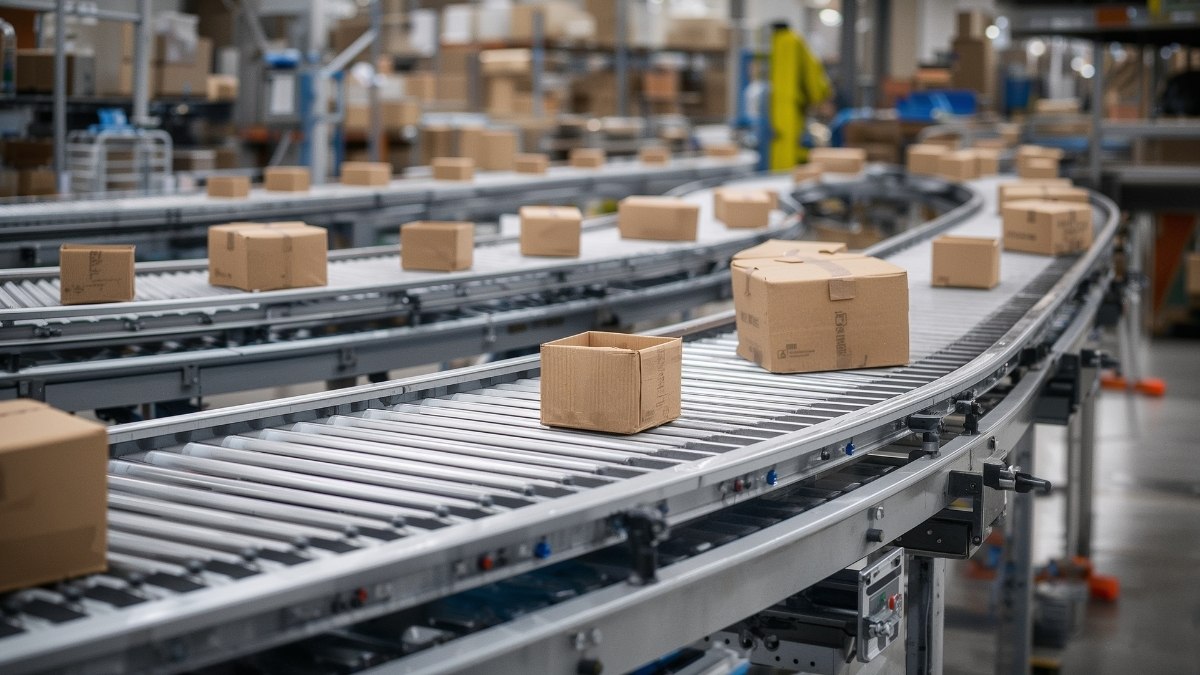
Potential use cases for physical AI in warehouse logistics include dynamic AMR routing around congestion, vision-assisted robotic picking for mixed products, predictive maintenance based on equipment signals, and exception detection when a pallet, carton, or location does not match expected conditions.
For a 3PL warehouse serving multiple customers, physical AI may also help coordinate changing order priorities, labor availability, equipment capacity, and service-level rules. It does not replace WMS logic, process design, safety controls, or human judgment. When properly integrated, it can make those systems more responsive to real conditions.
Frequently Asked Questions
How can a 3PL measure whether physical AI is improving warehouse performance?
A 3PL can track metrics such as travel time, throughput, equipment utilization, exception rates, order cycle time, downtime, and labor productivity. The most useful KPIs depend on the specific process the technology is intended to improve.
What makes a warehouse ready for physical AI?
Readiness usually depends on reliable operational data, connected warehouse systems, clearly defined workflows, compatible equipment, and measurable use cases. Poor data quality or disconnected systems can limit the value of AI-driven decisions.
Can a 3PL test physical AI before deploying it across an entire warehouse?
Yes. A limited pilot can focus on one workflow, zone, equipment type, or customer operation. This allows teams to evaluate performance, integration requirements, safety considerations, and operational impact before expanding deployment.
What happens when physical AI detects an exception it cannot resolve?
The system can route the issue to a predefined fallback workflow or human operator. Examples may include damaged inventory, blocked travel paths, unidentified objects, conflicting data, or equipment conditions outside approved operating limits.
Does physical AI create cybersecurity considerations for warehouses?
Yes. Connecting WMS platforms, IoT devices, cameras, robots, and other systems increases the number of digital connections that need to be managed securely. Access controls, system updates, network protections, and vendor security practices should be part of deployment planning.
Build Warehouse Technology Around the Operation
Physical AI works best when it solves a defined warehouse problem rather than adding technology for its own sake. Warehousing NYC By Best combines tech-enabled warehousing, fulfillment, inventory management, platform integrations, and a cloud-based WMS to support connected warehouse logistics.
Contact our team to discuss a 3PL warehouse solution built around your inventory and fulfillment needs.