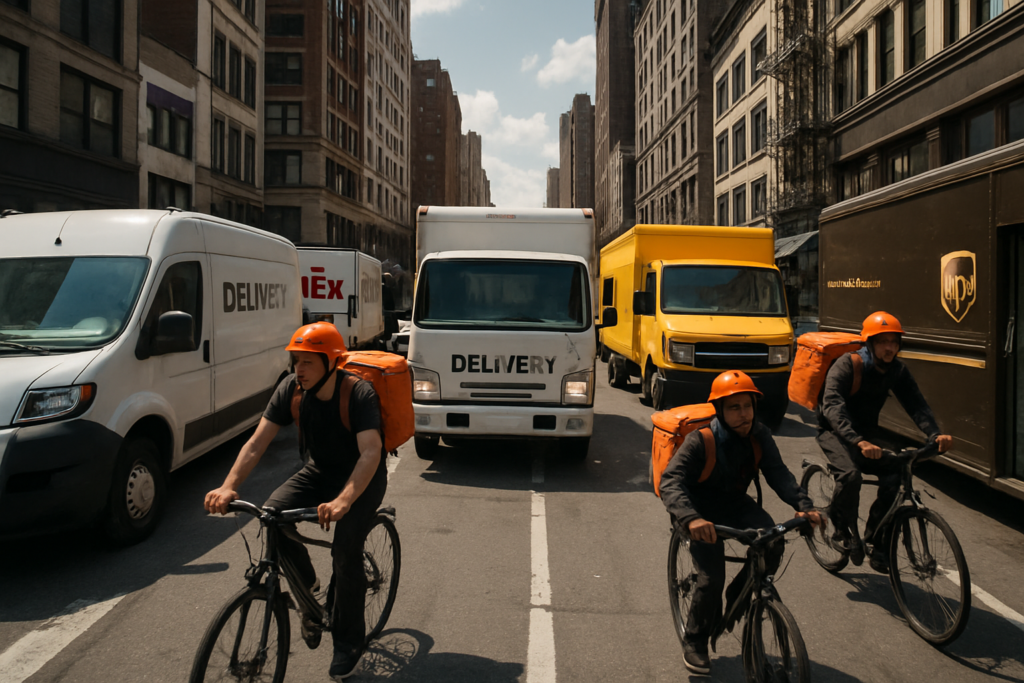
Last mile delivery solutions NYC refer to the final leg of the supply chain. These solutions move packages from a distribution hub directly to a recipient’s door within one of the most congested urban environments in the country. Getting this step right is critical. It is the most expensive and operationally complex portion of the entire shipping process.
Table of Contents
- Why NYC Last Mile Delivery Is Unlike Any Other Market
- How Last Mile Delivery Solutions NYC Actually Work
- Key Last Mile Delivery Solutions NYC Models and Their Trade-Offs
- Technology’s Role in Last Mile Delivery Solutions NYC Efficiency
- Things to Know About Last Mile Delivery Solutions NYC
- Improve Your Last Mile Delivery Solutions NYC Operation Today
- Frequently Asked Questions
Why NYC Last Mile Delivery Is Unlike Any Other Market
The scale here is unlike anywhere else in the United States. According to the NYC Comptroller’s Office “Fast Shipping. Slow Justice” report (November 2025), approximately 2.5 million packages are delivered daily in New York City. Moreover, roughly one in three New Yorkers receive parcels every single day. That figure has surged 39% from 1.8 million daily packages before the COVID-19 pandemic in 2020.
Nationally, last-mile deliveries totaled 6.8 billion parcels in 2024. Additionally, urban areas like New York and Los Angeles account for 28% of total national volume, according to Market Reports World (December 2025). The broader last-mile market is projected to grow significantly. Therefore, the market will expand from $229.27 billion in 2025 to over $1 trillion by 2035, advancing at a 16.2% compound annual growth rate, per the Last Mile Delivery Report 2026 by StartUs Insights.
Consumer expectations are also accelerating the pressure. According to Smart Routes (October 2025), 80% of consumers now consider same-day delivery a standard expectation. Furthermore, customer demand for same-day delivery increased 31% compared to 2023. For NYC businesses, that means infrastructure, routing, and fulfillment decisions have direct revenue consequences.

How Last Mile Delivery Solutions NYC Actually Work
Effective last mile delivery solutions NYC begin well before a driver loads a van. In fact, they start at a strategically located warehouse or fulfillment center positioned close enough to all five boroughs to minimize transit time.
At Warehousing NYC By Best, the operation supports last-mile needs through a fully integrated 3PL model. Once inventory arrives, it moves through pick, pack, and labeling processes. Subsequently, orders route via LTL, FTL, or parcel carriers to their final destinations. Understanding the difference between storage facilities is important here. The distinction between a fulfillment center vs warehouse often determines how quickly orders can ship out the door.
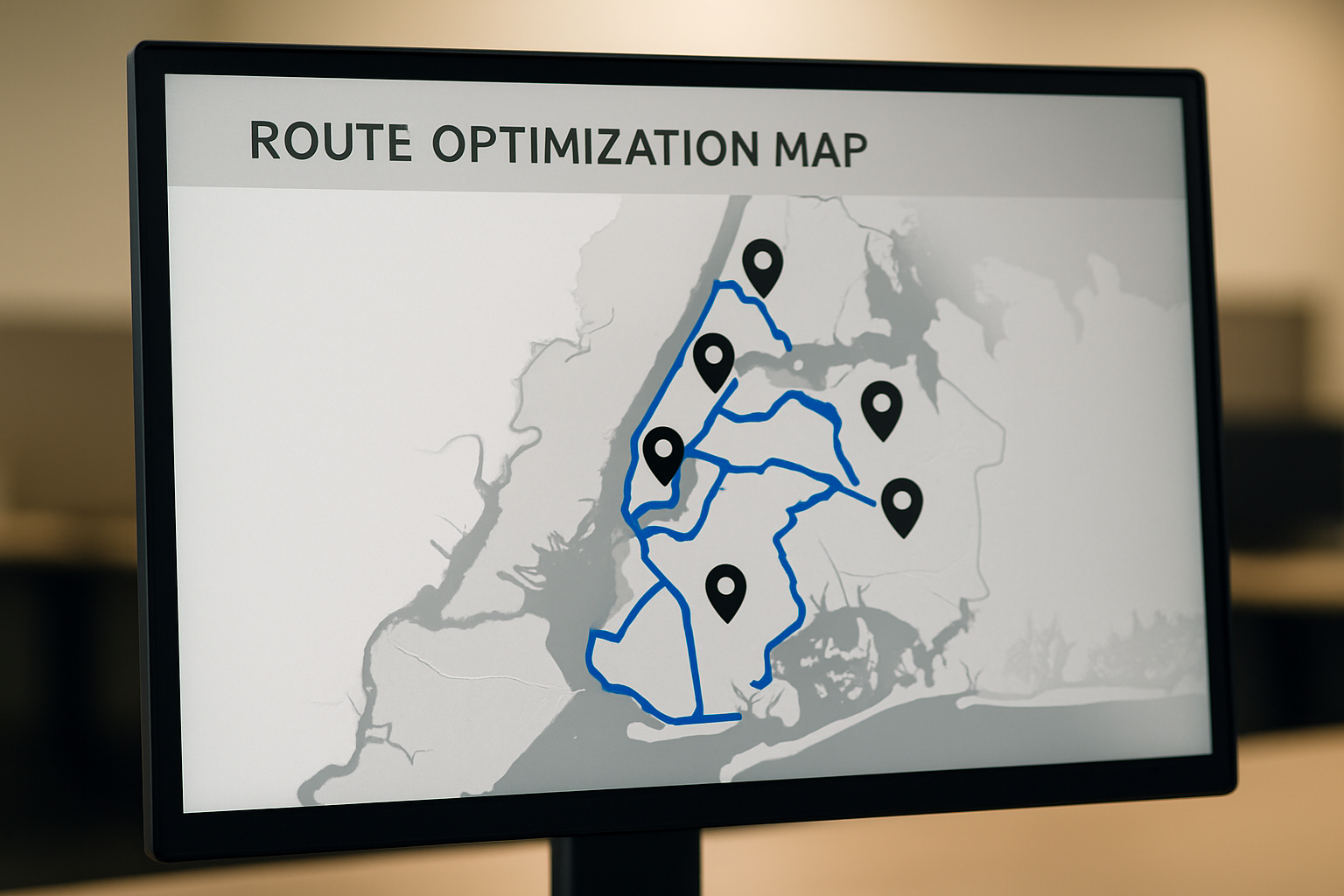
Routing software then assigns deliveries based on traffic patterns. Additionally, the software accounts for building access restrictions and time-window requirements. In NYC, variables like freight elevator scheduling, loading dock availability, and co-op building rules all affect delivery success rates. A well-designed last mile delivery solution accounts for all of these in advance rather than on the fly.
Key Last Mile Delivery Solutions NYC Models and Their Trade-Offs
There is no single approach that works for every business. Each model carries distinct advantages and limitations, particularly in a market as complex as NYC.
| Delivery Model | Best For | Key Trade-Off |
|---|---|---|
| Owned fleet (FTL/LTL) | High-volume, scheduled B2B routes | High capital and labor cost |
| Parcel carrier networks | eCommerce, residential | Less control over final-mile timing |
| Crowdsourced/gig drivers | Surge capacity, same-day | Inconsistent service quality |
| Micro-fulfillment + bike couriers | Dense urban residential areas | Limited package size/weight |
| 3PL-managed last mile | Mixed volumes, scalable growth | Requires reliable 3PL partner |
For eCommerce brands deciding between fulfillment strategies, it is also worth weighing amazon fba vs 3pl fulfillment. This comparison helps you understand where cost efficiency and control intersect.
Bike courier and electric cargo bike programs are gaining traction in Manhattan and Brooklyn. These programs work particularly well for deliveries under 50 lbs that need to move quickly through streets where vans face persistent congestion. Additionally, several NYC businesses have experimented with sidewalk locker programs. In late 2024, the city expanded a pilot to install lockers on public sidewalks. As a result, this addressed an estimated 90,000 packages lost or stolen annually, according to SAP Blog (2024-2025).
Technology’s Role in Last Mile Delivery Solutions NYC Efficiency
Technology is not a nice-to-have in NYC last mile logistics. In fact, it separates operations that scale from those that stall. Real-time route optimization, live traffic integration, and delivery confirmation systems all reduce failed delivery attempts. These failures are particularly costly in dense residential buildings.
Compliance with driver scheduling regulations matters just as much. Businesses managing their own delivery crews need to stay current with truck driver hours of service rules. This compliance helps them avoid FMCSA violations that can disrupt daily operations.
On the inventory side, accurate stock visibility directly affects last-mile performance. If a fulfillment center does not know what is on hand in real time, it cannot commit to same-day shipping windows. Therefore, investing in robust warehouse inventory management software is essential. Such software gives operators accurate cycle counts, real-time replenishment alerts, and order accuracy metrics that keep the last-mile pipeline moving without costly delays or mis-ships.
Warehousing NYC By Best integrates cloud-based warehouse management systems with ERP and marketplace platforms. These platforms include Shopify, Amazon, and WooCommerce, through an in-house development team. That connectivity allows businesses to move from order receipt to dispatch without manual handoffs that introduce errors.
According to the NYC Comptroller’s report (November 2025), last-mile delivery facilities in the city reported over 2,000 OSHA injuries between 2022 and 2024. This figure points to the importance of not just technology, but also safe operational design inside fulfillment facilities that feed the last-mile network.
Things to Know About Last Mile Delivery Solutions NYC
- NYC’s 2.5 million daily deliveries (NYC Comptroller’s Office, 2025) make it the highest-density last-mile market in the country. Margin for operational error is extremely thin.
- The NYC e-commerce and delivery workforce grew 84% since 2014. It reached approximately 45,400 workers in 2024, according to the NYC Comptroller’s Office. Labor sourcing and retention directly affect your delivery capacity.
- Same-day delivery demand increased 31% year-over-year (Market Reports World, December 2025). If your fulfillment setup cannot support it, competitors who can will absorb that customer segment.
- Building-specific access restrictions, including freight elevator windows and doorman schedules, are operational variables unique to NYC. These must be incorporated into any routing plan.
- Cold chain delivery adds another layer of complexity. Multi-temperature zone warehousing is available for businesses shipping temperature-sensitive products. However, these operations must be coordinated from the fulfillment stage through final delivery.
Improve Your Last Mile Delivery Solutions NYC Operation Today
If your current delivery setup is losing packages, missing same-day windows, or generating customer complaints, the issue usually traces back upstream. Specifically, it stems from how fulfillment and transportation are integrated. Request a free estimate from Warehousing NYC By Best to assess where your last-mile operation has gaps. Our team will identify the right combination of warehousing, fulfillment, and transportation services to support your growth in the NYC metro area. Tell us your daily volume, delivery zones, and current pain points.
Frequently Asked Questions
Q: What makes last mile delivery solutions NYC more expensive than other cities?
NYC last-mile costs are elevated by traffic congestion, building access restrictions, high labor costs, and a large proportion of high-rise residential deliveries. Failed first-attempt deliveries are particularly costly here. Redelivery in a dense urban environment consumes significant driver time and fuel. Routing inefficiencies and loading dock limitations at commercial buildings compound these costs further.
Q: Can a 3PL handle last mile delivery solutions NYC in all five boroughs?
Yes, a 3PL with a tri-state area presence can cover all five boroughs. This includes areas of Brooklyn and the Bronx that are harder to reach efficiently. However, coverage quality depends heavily on where the 3PL’s fulfillment facility is located relative to each borough. Additionally, it depends on which carrier or courier networks they use for final delivery. Proximity to major highways and freight corridors matters significantly.
Q: How does same-day delivery work through a 3PL in NYC?
Same-day delivery through a 3PL requires orders to be placed before a cutoff time, typically mid-morning. Inventory must already be positioned at a nearby fulfillment center ready to pick and dispatch. The 3PL then routes the shipment through a same-day courier partner or its own transportation network. Real-time WMS integration ensures the order flows from placement to dispatch without manual intervention.
Q: What are the biggest causes of failed deliveries in NYC residential buildings?
The most common causes are no access to the building, missed delivery windows, and package theft from unsecured lobbies. NYC has expanded its sidewalk locker pilot program specifically to address package theft. This theft accounts for an estimated 90,000 lost or stolen parcels per year. Businesses can also require signature confirmation or use locker drop-off options to reduce failure rates.
Q: Is last-mile delivery regulated in New York City?
Yes, NYC imposes several regulations on commercial deliveries. These include restrictions on truck size on certain streets, idling rules, and borough-specific freight movement guidelines. The NYC Department of Transportation maintains a set of commercial vehicle regulations that affect routing decisions. Businesses using third-party providers should confirm their carriers are compliant with city-specific rules. This prevents fines and service disruptions.