
In New York, warehousing decisions turn into customer experience decisions fast. If you serve the NYC metro, you are operating near one of the nation’s biggest consumption markets and a major port gateway.
The Port of New York and New Jersey was the nation’s busiest cargo gateway in May 2025, handling 774,698 TEUs (425,876 containers), which shows how much inventory is constantly flowing into and through the region.
If any of the signs below feel familiar, it may be time to consider third-party warehousing.
Contents
Key Takeaways: Is It Time To Outsource Warehousing?
- If your warehouse is driving late shipments, errors, or stockouts, customer experience will keep taking the hit.
- NYC-area space and labor dynamics can make in-house scaling expensive and operationally fragile.
- Outsourcing works best when you want variable cost and consistent execution during spikes.
- Compare true unit costs and service levels, not rent versus pallet storage fees.
- Choose partners based on systems, SOPs, metrics, and transition discipline, not promises.
What Third-Party Warehousing Really Means
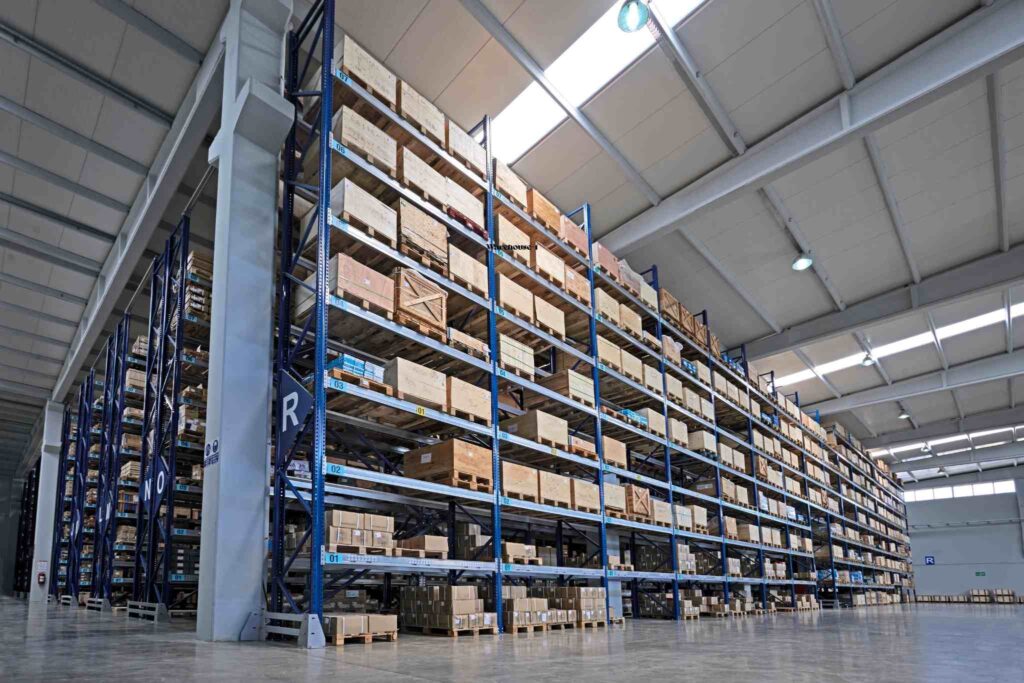
Third-party warehousing is when an external operator stores your inventory and handles warehouse work on your behalf. Depending on the setup, services can include:
- Inbound receiving and put-away
- Pallet and carton storage
- Pick, pack, and ship
- Labeling, kitting, and light assembly
- Returns processing
- Inventory control and cycle counts
For many businesses, the goal is not “outsourcing everything.” It is building a fulfillment operation that stays stable when demand, labor, and space constraints change.
7 Signs It’s Time to Outsource To Third-Party Warehousing
1. You Are Paying for Space You Cannot Use Efficiently
Outgrowing a facility is not just about square footage. It shows up as clogged aisles, unsafe staging, longer pick paths, and constant reshuffling. If your team is spending time moving inventory around just to access other inventory, you are losing throughput.
A third-party warehouse can be a solution when you need flexible storage without committing to a long lease or a major move.
2. Your Order Volume Swings and Staffing Can’t Keep Up
Promotions, seasonality, viral demand, and marketplace surges create staffing whiplash.
In-house operations often face two bad choices:
- Staff for peak and overtime during normal weeks
- Staff for normal and fall behind during peak
Outsourcing can make labor more scalable if the partner can show how they flex headcount and maintain accuracy during high-volume periods.
3. You Added Sales Channels and Complexity Is Growing Faster Than Revenue
As soon as you sell across multiple channels, warehouse work becomes rule-driven. You may need different labeling, pack rules, carton requirements, and carrier workflows by channel or customer.
This is where mature warehouse operations help: standardized SOPs, clear exception handling, and system controls that reduce “tribal knowledge.”
4. Inventory Is Tying up Cash Longer Than It Should
Holding inventory is not free, even before you pay to store it. Inventory carrying cost includes cost of capital, storage space costs, insurance, taxes, handling and administration, shrinkage, and obsolescence.
If your slow movers are accumulating, or your inventory accuracy is weak, you may be paying carrying costs while also missing sales due to stockouts on fast movers. Outsourcing does not fix planning by itself, but strong inventory control and cycle counting can reduce surprises that trigger emergency shipments and customer service issues.
5. Returns Are Becoming a Second Business
Returns are operationally heavy. They require inspection, restocking decisions, and disposition workflows. If the returned product sits, you lose resale value and tie up shelf space you need for sellable goods.
If your return rate is rising, you need a defined reverse logistics process with clear SLAs. Many 3PLs offer returns processing as a formal workflow instead of a backlog that grows in a corner.
6. Your Shipping Cutoffs Are Missing Customer Expectations
Serving the NYC metro often means customers expect fast delivery and reliable tracking. If you ship from far away, you may be trying to “buy speed” with expensive services. An outsourced warehouse in or near the metro area can help you stage inventory closer to demand and hit later cutoffs more consistently.
7. Your Team Is Spending Too Much Time on Warehouse Firefighting
A simple test: track leadership time. If your operations leaders spend more time on labor scheduling, rework, carrier issues, and inventory disputes than on improving the business, warehousing is consuming management bandwidth that should be focused on growth.
Outsourcing is often a focus decision as much as a cost decision.
What To Look for in a New York 3PL Partner

Focus on operational proof, not marketing language.
- Location fit: Can they serve NYC metro delivery expectations and carrier networks efficiently? The region’s freight volume is significant, and the inbound flow is constant.
- Systems and visibility: Inventory accuracy, real-time reporting, and integrations with your order systems
- Process maturity: Documented SOPs, cycle count cadence, and error root-cause tracking
- Capacity and scalability: Evidence that they can absorb growth and peaks without service degradation
- Pricing clarity: Transparent rate card with plain-language definitions
- Service levels: Receiving turnaround, dock-to-stock timing, pick accuracy targets, and order cutoff times
Ask how they handle exceptions. The difference between a good and bad 3PL is often what happens when something goes wrong.
Frequently Asked Questions (FAQs)
A 3PL is a service provider that can handle warehousing plus other logistics services (like transportation management, returns processing, and B2B compliance). A fulfillment center is usually focused on direct-to-consumer order fulfillment, often optimized for high-velocity picking and parcel shipping.
A typical onboarding can take a few weeks to a few months, depending on integrations, SKU count, labeling rules, and how many sales channels you run. The fastest transitions happen when product data is clean, and your workflows are documented before inventory moves.
You should not, if the provider offers real-time inventory visibility, clear receiving and cycle count procedures, and standard reporting. You can also set service levels for inventory accuracy, receiving turn times, and exception handling, so performance is measurable.
Many providers use a master services agreement plus a rate card and service level terms. Commitments vary by facility and season. Common structures include minimum monthly charges, storage minimums, and peak-season requirements.
Bring SKU count, average pallet positions, average monthly orders, average units per order, peak-week volume, inbound frequency, carton versus pallet inbound mix, and any special handling requirements (kitting, labeling, lot tracking). The more precise the inputs, the more reliable the pricing.
Decide Your Next Step With an NYC 3PL
If you are running out of space, struggling to staff peaks, or missing shipping cutoffs, it is time to consider third-party warehousing in New York, NY.
Contact Warehousing NYC by Best to request a warehousing quote and fit review. We provide warehouse storage and fulfillment support for businesses that need reliable logistics coverage in the New York, NY market.
Start your third-party warehousing today.