
Modern commerce runs on speed and precision. Customers expect fast delivery and flawless orders, whether they are purchasing a single item online or shipping pallets across the country.
At the same time, businesses are managing increasingly complex supply chains, larger product catalogs, and higher order volumes.
Understanding how modern warehousing works can help companies reduce fulfillment mistakes, improve shipping timelines, and operate more efficiently in competitive markets.
What’s In This Guide
Quick Facts
- Warehousing improves accuracy by centralizing inventory and reducing errors.
- A WMS tracks stock in real time for more accurate fulfillment.
- Barcode scanning helps prevent picking and packing mistakes.
- Faster delivery comes from efficient layouts and streamlined workflows.
- Warehousing helps improve reliability, control costs, and support growth.
What Order Accuracy and Delivery Speed Mean in Modern Logistics

Order accuracy and delivery speed are two of the most important performance metrics in fulfillment operations. Together, they determine whether customers receive the right products on time.
Order Accuracy
Order accuracy refers to the percentage of orders delivered without mistakes in items, quantities, packaging, or labeling.
Even small errors create operational problems. Incorrect shipments increase returns, customer service requests, and replacement shipping costs. They also damage brand trust.
Common fulfillment errors include:
- Wrong product or SKU shipped
- Missing items in multi-product orders
- Incorrect quantities
- Incorrect shipping labels
Warehousing reduces these mistakes by introducing systematic inventory tracking, standardized picking processes, and scanning verification systems.
Delivery Speed
Delivery speed measures the time between order placement and final delivery.
Customer expectations continue to accelerate. Logistics research shows that 86% of consumers expect delivery within two days or less.
To meet these expectations, businesses must streamline every stage of fulfillment. That includes inventory storage, picking, packing, shipping coordination, and transportation.
➤ DISCOVER OUR LOGISTICS SERVICES
How Warehousing Improves Order Accuracy

Warehousing introduces structured systems that reduce human error and improve operational visibility.
Inventory Management Systems Reduce Errors
One of the most important technologies in modern warehousing is the Warehouse Management System (WMS).
A WMS tracks inventory levels, product locations, and order processing activities in real time. It also guides workers through each step of the fulfillment process.
Key benefits include:
- Real-time inventory visibility
- Automated stock updates
- Reduced manual data entry
- Improved inventory forecasting
Warehouse management systems improve inventory control and operational efficiency by reducing manual tracking errors.
Organized Storage Improves Picking Accuracy
Warehouse layout design plays a critical role in fulfillment accuracy.
Instead of storing products randomly, warehouses organize inventory using structured systems such as:
- Bin locations
- Pallet storage zones
- SKU-based organization
- High-demand product zones
This structure reduces search time and prevents workers from selecting the wrong item.
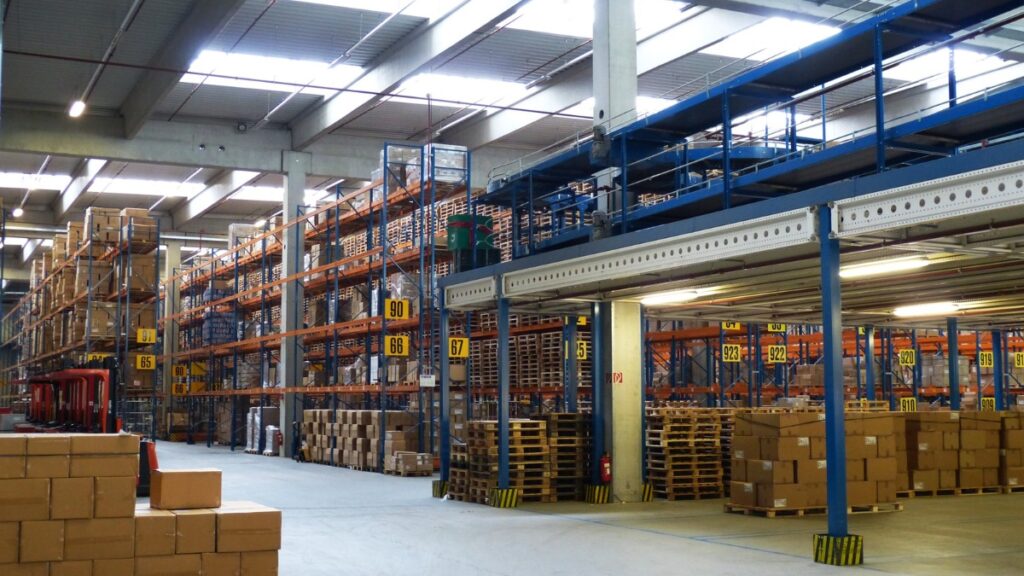
For example, fast-moving products are often stored near packing stations to reduce travel time during order picking.
Clear storage organization improves both speed and accuracy during fulfillment operations.
Barcode and Scanning Technology
Barcode scanning technology is one of the most effective tools for reducing fulfillment errors.
Each product and storage location receives a unique barcode that workers scan during:
- Inventory receiving
- Order picking
- Packing verification
- Shipping confirmation
- Scanning confirms that the correct product is being processed at each stage.
GS1, the global standards organization behind barcode systems, reports that barcode-based identification improves supply chain accuracy and traceability.
Standardized Packing Procedures
Warehouses use consistent packing protocols to maintain order accuracy.
These procedures often include:
- Packing checklists
- Weight verification
- Automated order confirmation systems
- Quality control checks before shipping
Standardization ensures that every order is processed the same way, regardless of volume or staffing changes.
This consistency reduces shipping mistakes and improves customer satisfaction.
➤ STREAMLINE YOUR SHIPPING OPERATIONS
How Warehousing Speeds Up Delivery

Warehousing not only reduces errors. It also accelerates fulfillment and shipping.
Strategic Warehouse Locations
Location is a critical factor in delivery speed.
Warehouses located near major highways, airports, rail hubs, and shipping ports can distribute goods more efficiently across regional and national markets.
Strategic warehouse placement shortens the distance between inventory and customers, which reduces transit times.
Efficient Pick-and-Pack Operations
Pick-and-pack is the process of selecting items from inventory and preparing them for shipment.
Modern warehouses use optimized picking methods such as:
- Batch picking
- Zone picking
- Wave picking
These techniques reduce unnecessary worker movement and increase productivity. Efficient picking processes allow warehouses to process more orders in less time.
Automated Shipping and Labeling
Automation also plays a major role in accelerating fulfillment.
Modern warehouses use software systems that automatically:
- Generate shipping labels
- Select optimal carriers
- Calculate shipping costs
- Print compliance labels
This automation eliminates time-consuming manual tasks and reduces labeling errors.
Carrier Integration and Fulfillment Software
Warehousing systems often integrate directly with shipping carriers such as UPS, FedEx, and USPS.
These integrations enable:
- Automated carrier selection
- Real-time shipping rates
- Automated tracking number generation
- Faster shipment dispatch
Carrier integration ensures that packages move quickly from the warehouse to the transportation networks without delays.
➤ READ: How Scalable Warehousing Solutions Support Long-Term Business Growth
Frequently Asked Questions (FAQs)
What is considered a good order accuracy rate in warehousing?
The right benchmark depends on product type, order complexity, and shipping volume. Businesses with high SKU counts or customized orders often track accuracy even more closely.
How does warehousing help reduce shipping costs?
Warehousing can lower shipping costs by consolidating inventory, reducing split shipments, improving packaging consistency, and placing products closer to major customer regions to cut transportation distance.
Is warehousing only useful for large businesses?
No. Small and mid-sized businesses can benefit from warehousing as soon as order volume becomes hard to manage manually. Even moderate growth can create fulfillment bottlenecks that organized warehousing helps solve.
How often should warehouse inventory be audited?
Inventory should be checked regularly through cycle counts and periodic full audits. The ideal frequency depends on order volume, SKU movement, and error risk, but fast-moving inventory usually needs more frequent review.
Can warehousing improve customer satisfaction beyond faster shipping?
Yes. Warehousing can improve customer satisfaction by reducing incorrect orders, preventing stockouts, improving tracking visibility, and creating a more consistent delivery experience.
Looking to Improve Order Accuracy and Shipping Speed?
Businesses in New York, NY, looking to streamline logistics operations and strengthen their shipping performance can benefit from working with an experienced warehousing partner.
Warehousing NYC by Best provides structured inventory management, pick-and-pack services, and distribution support designed to help e-commerce brands, distributors, and growing businesses improve fulfillment accuracy and delivery speed.
Request a quote today.