Businesses can’t afford delays, errors, or wasted space. That’s where warehouse logistics comes in. Put simply, warehouse logistics is the management of every operation inside a warehouse. With the help of warehouse logistics services, businesses can reduce costs, improve efficiency, and deliver a better customer experience.
But what exactly does warehouse logistics involve, and why is it so important for growing companies? Let’s break it down.
Key Takeaways
✔ The average size of a warehouse varies widely by industry and location.
✔ Accurately calculate storage needs before committing to square footage.
✔ Plan space for future growth — 10–25% buffer recommended.
✔ Use industry benchmarks but customize for your operational realities.
✔ Urban warehouses, like those in NYC, require creative design for efficiency.
Table of Contents
Finding the perfect warehouse size can make or break your business operations. Too small, and you’ll struggle with inefficiency and overflow; too large, and you’ll pay for space you don’t need. Understanding the average size of a warehouse — and how it fits your company’s unique workflow — is the first step to making a smart, scalable decision that saves money and boosts productivity.
Understanding the Average Size of a Warehouse
The average warehouse size in the United States has grown steadily over the last decade, now typically ranging between 25,000 and 50,000 square feet. However, that figure varies dramatically depending on your industry, inventory type, and location.
Small businesses might operate efficiently in spaces under 10,000 sq. ft., while large-scale fulfillment centers often exceed 200,000 sq. ft. The typical warehouse size in dense areas like New York is smaller, averaging 5,000–40,000 sq. ft., often spread across multiple floors or optimized for high-density storage systems.
When choosing your warehouse, remember that the average is just a benchmark. The right size depends on your operational volume, handling processes, and how quickly goods move through your facility.
4 Key Factors That Influence Warehouse Space Requirements
1. Type and Volume of Inventory
The products you store play the biggest role in defining your warehouse space requirements. Bulky or heavy goods require more square footage, while lightweight items can be stored vertically. High-turnover inventory often needs wider aisles and staging zones for fast movement.
2. Layout and Storage Systems
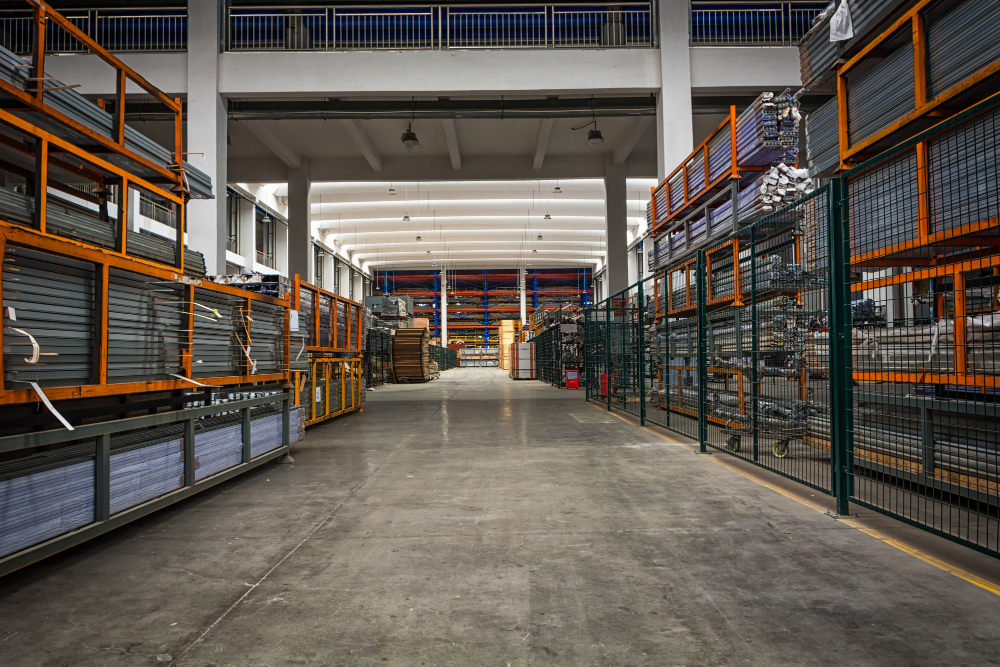
Efficient racking systems can reduce the footprint you need. Using vertical storage, pallet racks, or mezzanine levels can help maximize cubic space while maintaining accessibility.
3. Operational Flow and Access Points
Areas for receiving, packing, and shipping — plus space for forklifts, docks, and safety zones — can account for up to 30% of total warehouse size. Plan with flow efficiency in mind to avoid congestion and downtime.
4. Business Growth and Scalability
Anticipate your company’s growth over the next three to five years. A warehouse that fits perfectly today may feel cramped tomorrow. Building in flexibility ensures you won’t need costly relocations later.
Quick Facts: Warehouse Size & Usage Benchmarks
- Average warehouse size (U.S.): 25,000–50,000 sq. ft.
- Typical NYC warehouse size: 5,000–40,000 sq. ft.
- Manufacturing warehouses: 30,000–80,000 sq. ft.
- Fulfillment centers: 100,000–1,000,000+ sq. ft.
- Recommended growth buffer: 10–25% additional space
How to Choose the Right Warehouse Size: A Step-by-Step Process
Step 1 – Calculate Your Storage Needs
Start by assessing your inventory in measurable units — pallets, cases, or cubic feet. Multiply the total quantity by space per unit to estimate floor area. Add room for aisles, staging, and safety zones. Seasonal businesses should plan for peak periods.
Warehousing NYC By Best helps clients perform this precise calculation to avoid over- or underestimating capacity.
Step 2 – Account for Operational and Future Needs
Your warehouse is more than a storage box — it’s a living environment for your team, equipment, and growth. Include offices, loading areas, restrooms, and maintenance space in your layout. A good rule is to reserve 10–25% extra square footage to accommodate future scaling, new product lines, or automation systems.
Step 3 – Use Industry Benchmarks as a Guide
Benchmarks help you set realistic expectations. For example, retail businesses often use 2–3 square feet per SKU, while manufacturers plan based on production cycles. In New York City, where every square foot counts, efficient layout design can offset limited square footage.
At Warehousing NYC By Best, experts help businesses compare benchmarks to actual operational data — ensuring accuracy and cost efficiency.
4 Typical Warehouse Size by Industry
1. E-Commerce and Fulfillment Centers
E-commerce warehouses are often massive — 100,000 sq. ft. or more — to handle thousands of SKUs and high shipping volumes. They prioritize rapid order processing and automated storage systems.
2. Manufacturing and Assembly
Medium-sized warehouses (30,000–80,000 sq. ft.) balance production support with finished goods storage, often located close to suppliers or distribution networks.
3. Food and Beverage Warehouses
Temperature control, compliance zones, and safety regulations affect usable space, often requiring additional square footage for refrigeration and ventilation systems.
4. Logistics and Distribution Hubs
These facilities can exceed 1 million sq. ft., housing operations for multiple clients or regions. Efficiency and layout optimization are key to profitability.
How Big Are Warehouses in Urban Areas Like New York?
Space in New York comes at a premium, meaning businesses often operate in compact, high-efficiency facilities. The average warehouse size in NYC typically falls between 5,000 and 40,000 sq. ft., depending on borough and zoning.
Multi-story layouts and shared facilities are increasingly popular, allowing companies to maximize space without relocating outside the city. Warehousing NYC By Best specializes in helping businesses navigate these challenges with scalable, flexible storage options tailored to NYC’s unique real estate landscape.
Expert Tips to Maximize Your Warehouse Space
Go vertical: Invest in high racks or mezzanine levels to make use of cubic footage.
Use smart layouts: Design efficient traffic flow for workers and equipment.
Leverage technology: Warehouse management systems (WMS) improve accuracy and space utilization.
Segment your zones: Dedicate areas for receiving, picking, packing, and returns to streamline operations.
Audit regularly: Review usage annually to identify underused or overcrowded areas.
Frequently Asked Questions | Warehouse Sizes and Space Planning (FAQs)
What is the ideal size of a warehouse?
The ideal warehouse size depends on your business model and product type. For most mid-sized operations, 20,000–50,000 sq. ft. allows efficient storage without excess overhead.
How to calculate the size of a warehouse?
Determine your total storage volume (in pallets, bins, or cubic feet), multiply by average space per unit, and include non-storage areas like docks and offices. Add 10–25% extra capacity to future-proof your layout.
What is the ideal warehouse capacity?
Your ideal capacity uses around 80–85% of total space. This ensures safety, maneuverability, and efficient workflow without overpacking.
What is a key factor for determining the size of a new warehouse?
Inventory turnover is the biggest factor. High-turnover goods need more staging space, while low-turnover inventory requires long-term static storage.
How big are warehouses in cities like New York?
Most NYC warehouses range from 5,000–40,000 sq. ft., often designed vertically to maximize limited ground space and meet zoning restrictions.
Choose the Right Warehouse Size with Warehousing NYC By Best
Selecting the right warehouse size is about balance — aligning your current needs with future growth and cost efficiency. With expertise in New York’s dynamic storage market, Warehousing NYC By Best helps businesses find optimized, scalable solutions that fit both their budget and operations.
Ready to find the ideal warehouse size for your company?
Contact Warehousing NYC By Best today for expert guidance and customized warehousing in New York, NY.