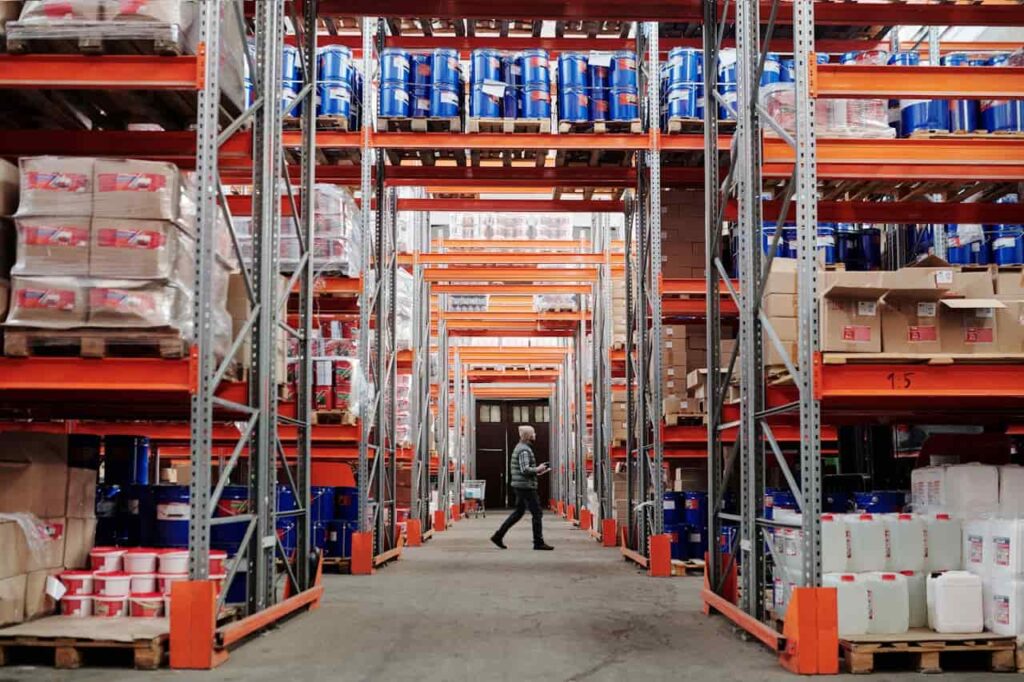
Oversized and heavy equipment needs storage systems built for size, weight, and risk. Commercial warehouses handle it with cantilever racks for long items, reinforced floors for concentrated loads, and high-capacity floor stacking for oversized footprints.
Movement is managed with heavy-duty forklifts and cranes, with optional outdoor storage like secured shipping containers when it makes sense. Because the stakes are higher, the best facilities back it all with 24/7 security and strict safety protocols.
Here’s how commercial warehouses in New York City typically plan, receive, store, and protect oversized and heavy equipment.
Contents
In Brief
- Match storage method to load size and weight.
- Confirm floor capacity before placement.
- Use trained crews with rated forklifts or cranes.
- Use secured containers only when exposure is controlled.
- Lock it down with 24/7 security and documented releases.
Reinforced Flooring and Floor Load Checks
Heavy equipment is often “heavy” because it concentrates weight into small contact areas, such as skids, outriggers, or machine feet. That is why warehouses focus on floor performance early.
Two practical ideas guide the process:
- Industrial floors are designed around real load cases, including materials stored directly on the slab, storage rack loads, and vehicle loads. ACI’s slabs-on-ground guide explicitly addresses these categories.
- Uniform live-load assumptions do not tell the full story for racks or point loads. RMI has highlighted the mismatch between uniform warehouse live loads and the concentrated loads created by rack uprights.
In a well-run warehouse, “reinforced flooring” is not a marketing phrase. It shows up as documented slab information, limited by zone, and clear rules for dunnage and load spreading.
High-Capacity Floor Stacking
Not everything belongs on racks. For large crates, machine bases, or awkward footprints, high-capacity floor stacking is often safer and more efficient than trying to force a load into a standard bay.
Good floor-stacking programs include:
- Engineered dunnage and cribbing to distribute loads, keep equipment level, and prevent contact damage
- Defined lanes and exclusion zones to keep pedestrian routes away from heavy handling
- A “low re-handling” layout, meaning the warehouse puts the equipment where it can be retrieved without moving three other pieces first
- Documented storage positions, so the item is not “somewhere on the floor,” it is in a tracked location
Floor stacking sounds simple, but it is one of the fastest ways to create crush hazards and tip risks if it is not planned.
Cantilever Racks for Long Loads and Unusual Shapes
Cantilever racks are a common solution when items are long, bulky, or awkward, for example, pipes, structural members, long crates, and certain equipment attachments. The benefit is access: cantilever systems avoid front vertical posts that interfere with long loads.
The important part is not the rack style, it is the engineering and utilization. Industrial rack systems should align to recognized design and utilization requirements, such as ANSI MH16.1 for industrial steel storage racks.
When a warehouse uses cantilever racking well, you will see:
- Capacity labeling and clear loading rules
- Damage inspections, since impacts can compromise load paths
- Controls against improvised modifications and “we just welded something on” decisions
If a facility offers cantilever storage but cannot explain how it sets load limits or inspects damage, treat that as a risk signal.
Heavy-Duty Handling Equipment and Trained Operators
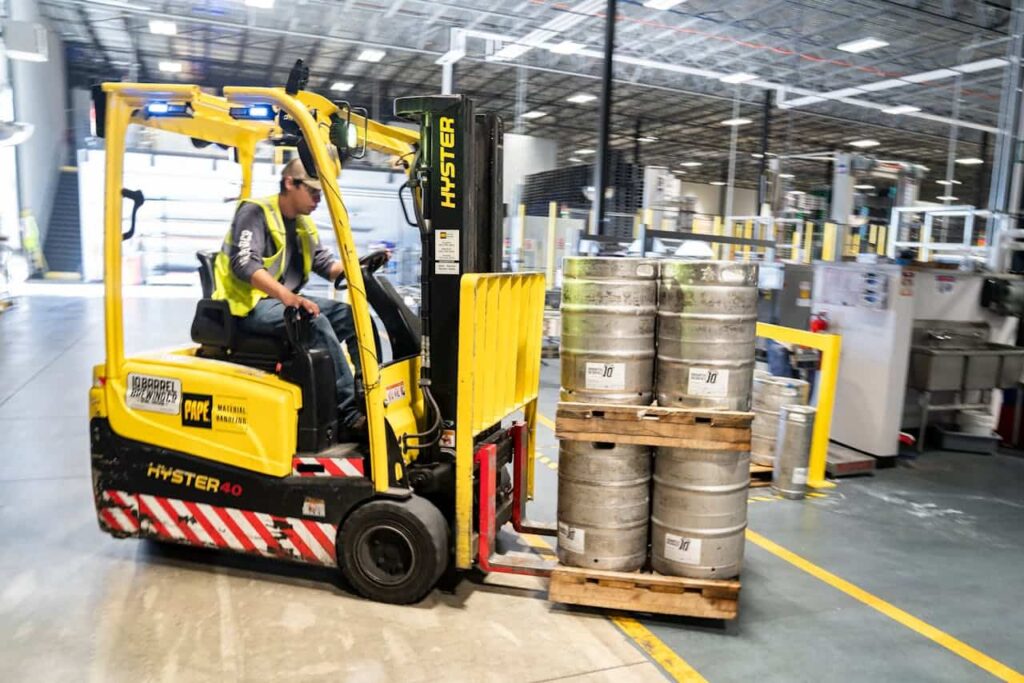
Oversized freight usually requires more than a standard forklift. Warehouses typically rely on some mix of:
- Heavy-capacity forklifts with specialty attachments
- Cranes or mobile lifts for items that should not be forked
- Rigging gear, skates, and jacks for precise positioning
The safety reason is straightforward: forklift incidents are a real hazard in warehousing. NIOSH notes that forklift overturns are the leading cause of forklift-related fatalities and represent about 25% of forklift-related deaths. This makes training crucial across industries.
A competent warehouse will have a clear answer to two questions:
- What equipment will move your load?
- Who is qualified to operate it, and how is that verified?
Receiving That Prioritizes Control Over Speed
For oversized and heavy equipment, receiving is a controlled operation, not a fast unload.
Warehouses that do this well typically use:
- Appointment-based receiving windows, especially in NYC
- Clear staging areas that keep pedestrians away from the unload path
- Condition documentation at arrival, including photos and packaging checks
- A “stop authority” culture where staff can pause the job if something looks wrong
This is also where many damage claims are won or lost. If the warehouse documents condition before it moves the load, everyone is protected.
Outdoor Storage and Shipping Containers
Indoor space is not always the best option for every piece of equipment. Some warehouses offer secured outdoor storage and may use shipping containers for weather-resistant containment.
This can be a smart fit when:
- The item is rugged, crated, or already built for outdoor exposure
- You need flexible access without tying up premium indoor square footage
- You want an extra layer of physical containment
The trade-off is environmental exposure. Outdoor programs should address moisture, corrosion, temperature swings, and pest control. The right solution depends on the equipment, not a one-size option.
24/7 Security and Controls That Reduce Loss and Liability
Oversized equipment is often expensive and difficult to replace. Warehouses reduce theft and tampering risk with layered controls, such as:
- Controlled entry, visitor rules, and restricted zones
- Camera coverage and logging of access events
- Inventory tracking tied to exact locations, not general areas
- Chain-of-custody documentation for check-in and release
If you are evaluating providers, ask how the facility documents movements and who can authorize releases.
Frequently Asked Questions
Use a storage plan matched to the load: reinforced floor zones with load-spreading dunnage for heavy point loads, floor stacking for oversized footprints, and cantilever racking for long items. Pair that with controlled handling using properly rated forklifts or cranes.
Choose floor stacking when the item is too large, irregular, or heavy for standard racking, or when minimizing re-handling reduces damage risk. The floor plan should use defined lanes, dunnage, and tracked positions.
Cantilever racks allow long or bulky items to sit on arms without front posts blocking loading. This improves access and reduces handling complexity for long loads.
Yes, for certain equipment types. A secured container can provide weather-resistant storage when indoor space is not necessary, but the warehouse should manage moisture, corrosion risk, and access control.
Provide dimensions, weight, photos, packaging details, lift points, and handling restrictions. This lets the warehouse select the right equipment, storage method, and receiving plan.
Choose the Right Warehouse for Oversized and Heavy Equipment Storage
If you are evaluating options, consider working with Warehousing NYC By Best.
Our team understands the operational demands of oversized and heavy equipment storage in New York, NY, and can review your dimensions, weight, packaging, and handling requirements to recommend the right storage method.
If you need a quote or feasibility review, contact Warehousing NYC By Best today.