Creating a warehouse strategy is a step-by-step process, not a single decision. It begins with evaluating your current operations to identify bottlenecks, then setting clear goals around speed, accuracy, and cost control. From there, businesses design targeted improvements, such as optimizing layout, adopting technology, and refining workflows.
Here’s how to develop a warehouse strategy for modern supply chains.
Table of Contents
Key Takeaways✔ A strong warehouse strategy aligns warehouse operations with business goals to improve efficiency, accuracy, and scalability. ✔ Modern warehouses function as fulfillment and distribution hubs, not just storage spaces. ✔ Strategic warehousing is essential in warehousing NYC due to space constraints, cost pressures, and high delivery expectations. ✔ Optimized warehouse operations reduce costs, minimize errors, and support faster order fulfillment. ✔ Partnering with an experienced warehousing provider enables businesses to scale efficiently without increasing operational risk. |
What Is a Warehousing Strategy?
So, what is a warehousing strategy in practical, real-world terms? A warehousing strategy is a long-term framework that defines how a business designs, manages, and scales its warehouse operations to support supply chain performance and customer expectations.
Rather than focusing on daily tasks, a warehouse strategy establishes the big-picture direction for how warehousing solutions support the business.
Key Elements of a Warehouse Strategy
Space utilization: How warehouse layout, slotting, and storage methods maximize available space
- Labor planning: How staffing levels and workflows support efficiency and accuracy
- Technology adoption: How systems like WMS, automation, and data tracking improve visibility
- Process design: How inventory moves from receiving to fulfillment with minimal friction
Strategic Considerations in Warehousing NYC
In dense logistics markets like warehousing in NYC, strategy must also account for:
- Facility location and transportation access
- Regulatory and compliance requirements
- Cost control in high-rent environments
- Scalability without expanding physical footprint
Businesses that approach warehousing as a strategic function—not just storage—are better equipped to compete, adapt, and grow.
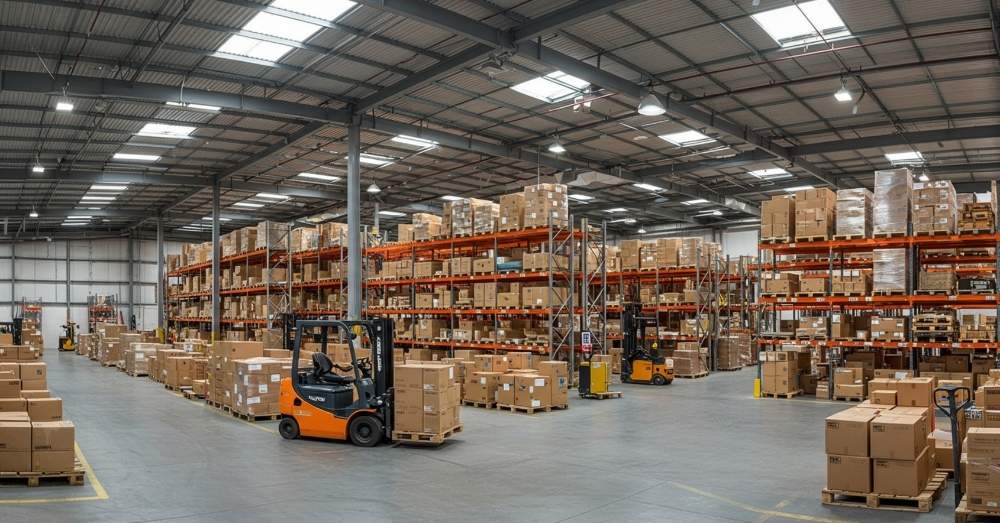
What Is the Main Objective of Warehousing Strategy?
The main objective of a warehouse strategy is alignment—ensuring warehouse operations support broader business goals such as efficiency, profitability, and customer satisfaction rather than functioning independently.
A well-structured warehouse strategy helps businesses:
- Improve Fulfillment Performance: Streamlines order processing and increases pick-and-pack accuracy to meet tighter delivery expectations
- Optimize Inventory and Space Utilization: Reduces overstock and dead inventory while maximizing the use of available warehouse space
- Control Operational Costs: Lowers labor inefficiencies, minimizes handling time, and reduces costly errors and rework
- Enable Scalable Growth: Creates flexible processes that adapt to changing demand, seasonal spikes, and business expansion.
Why Is Strategic Warehousing Important?
Strategic warehousing also enables businesses to adopt technology proactively rather than reactively. With close to 80% of warehouse operators prioritizing technology upgrades, companies without a clear strategy risk falling behind on speed, accuracy, and cost control.
When warehouse kitting service and fulfillment is reactive, problems compound quickly—inventory issues lead to fulfillment delays, rising costs, and unhappy customers.
The Cost of Reactive Warehousing
- Frequent stockouts or overstock situations
- Inefficient warehouse operations and labor strain
- Missed delivery windows and service failures
The Benefits of Strategic Warehousing
- Predictable inventory flow and order fulfillment
- Better planning for seasonal and peak demand
- Greater resilience during supply chain disruptions
This level of planning is especially critical in warehousing in NYC, where last-mile delivery expectations are demanding and operational errors are costly.
Steps to Developing Warehousing Strategy
Build a Current Picture of Your Warehouse Operations
The first step is understanding where you are today. This means analyzing layout efficiency, inventory flow, order volumes, and labor usage. A clear view of current warehouse operations reveals bottlenecks and inefficiencies that strategy must address.
Build a Future Picture of Your Warehouse Operations
Next, define where your business is headed. Growth projections, new sales channels, and evolving customer expectations all influence future needs. Planning for this future ensures your warehouse strategy remains relevant and scalable.
Build the Strategy
As the strategy takes shape, technology selection becomes a key decision. Cloud-based WMS and automation tools help streamline warehouse operations by increasing visibility, improving coordination, and shortening fulfillment timelines. Many businesses find that partnering with experienced warehousing NYC providers strengthens execution and reduces risk.
What Are the 5 Main Activities in a Warehouse?
Understanding what is a warehouse from an operational perspective means knowing its core functions. These activities form the backbone of effective warehouse operations and must be aligned through a cohesive warehouse strategy.
The 5 Core Warehouse Activities
Receiving and Inbound Processing
- Verifying shipments
- Inspecting goods and recording inventory
Put-Away and Storage
- Assigning inventory to optimal locations
- Organizing stock for efficient access
Inventory Management and Control
- Tracking stock levels and accuracy
- Conducting cycle counts and audits
Order Picking, Packing, and Fulfillment
- Selecting items efficiently
- Preparing orders for shipment
Shipping and Outbound Distribution
- Coordinating carrier pickup
- Managing delivery timelines
Frequently Asked Questions (FAQs)
How often should a warehouse strategy be reviewed or updated?
A warehouse strategy should be reviewed at least annually or whenever there are major changes in order volume, inventory mix, or customer demand—especially for businesses operating in fast-moving markets like warehousing in NYC.
Can small or mid-sized businesses benefit from a formal warehouse strategy?
Yes. Even smaller businesses benefit from a defined warehouse strategy because it improves warehouse operations, controls costs, and supports growth without requiring large upfront investments.
How does technology support modern warehouse strategy?
Technology such as a warehouse management system (WMS) improves inventory visibility, order accuracy, and workflow efficiency, making it easier to scale warehouse operations and integrate advanced warehousing solutions.
When should a business consider outsourcing warehousing services?
Outsourcing makes sense when internal warehouse operations become costly, space-constrained, or difficult to scale—particularly with warehousing in NYC, where real estate and labor costs are high.
How do warehouse kitting service and fulfillment support business growth?
Warehouse kitting service and fulfillment reduce handling time, improve order accuracy, and allow businesses to offer bundled or customized products without adding operational complexity.

Build a Warehouse Strategy That Supports Growth
A well-developed warehouse strategy is a powerful asset for modern supply chains—especially in complex markets like New York, NY.
Warehousing NYC By Best supports businesses with strategically located facilities and adaptable services designed for the realities of urban logistics.
Contact us today to learn more about our warehousing solutions.